
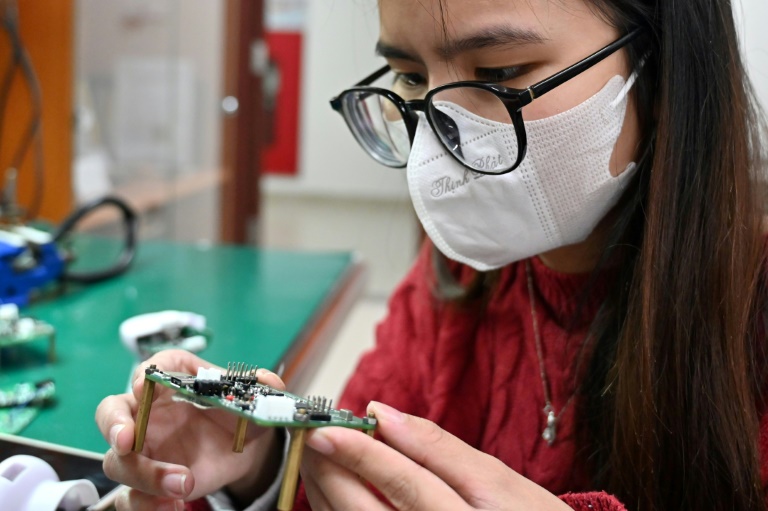
In the landscape of science, technology, engineering, and mathematics (STEM), gender disparity remains a persistent global challenge. However, some nations are proving that progress is not only possible but measurable. According to new analysis released to coincide with the International Day of Women and Girls in Science on February 11, Sweden has been named Europe’s best country for women in STEM .
The comprehensive study, conducted by the engineering firm Accu, evaluated countries across Europe based on a range of key indicators. These included women’s representation in STEM occupations, the proportion of women among STEM graduates, the share of tertiary-educated women employed in STEM roles, and national gender pay gaps . The goal was to create a comparative picture of how effectively different nations enable women to enter, remain, and progress in STEM careers.
The Numbers Behind the Top Ranking
Sweden secured the top position with an impressive overall score of 9.06 out of 10 . This top ranking is built on several standout metrics that highlight both the accessibility of STEM fields to women and the quality of their participation.
- Dominance in Science & Technology: Perhaps the most striking statistic is that women make up a majority—51.3% —of Sweden’s science and technology workforce . This figure significantly exceeds the European average and indicates a strong pipeline of female talent in these critical sectors.
- Strong ICT Representation: In the typically male-dominated field of Information and Communication Technology (ICT), Swedish women account for 24% of specialists, outperforming the European average of 19.6% .
- Employment of Educated Women: The study also found that 41% of tertiary-educated women in Sweden are employed in STEM roles. This figure is second only to Luxembourg and demonstrates that once women earn degrees in these fields, the Swedish labor market is effective at integrating them into relevant careers .
- Relative Pay Equity: While the gender pay gap remains an issue everywhere, Sweden’s gap in STEM stands at 11.2% . This is almost exactly in line with the European average of 11.5%, and far better than countries like the UK, which ranks 28th with a staggering 19.8% pay gap .
| Rank | Country | Women in ICT (% of labour force) | Women in Science & Tech Workforce (%) | Tertiary-educated Women in STEM (%) | Gender Pay Gap (%) | Total Score (/10) |
|---|---|---|---|---|---|---|
| 1 | Sweden | 24.0 | 51.3 | 41.0 | 11.2 | 9.06 |
| 2 | Ireland | 24.4 | 42.4 | 36.2 | 8.6 | 8.56 |
| 3 | Iceland | 18.6 | 48.4 | 36.6 | 9.8 | 8.21 |
| European Average | *19.6* | *41.2* | *31.9* | *11.5* | *N/A* |
Data reflects findings from the Accu study published in February 2026
A Culture of Equality and Active Policy
The statistics from the Accu study paint a clear picture of success, but they are ultimately a reflection of deeper societal values and deliberate policy choices. Sweden’s top ranking is not an accident; it is the result of a long-standing, institutionalized commitment to gender equality that permeates education and industry.
Government Strategy and National Coordination
The Swedish government has made increasing the number of women in STEM a national priority. Through its national STEM strategy, the government has set long-term goals to bolster the number of trained individuals in these fields, explicitly focusing on increasing girls’ and women’s interest in science and technology . A dedicated STEM delegation works to ensure long-term coordination of these activities, bringing together government agencies, educational institutions, and the private sector . This “quadruple helix” model of collaboration—where government, academia, industry, and civil society work together—is a hallmark of the Swedish approach .
Active Efforts in Education
The focus on equality begins early and continues through higher education. Researchers like Dr. Ulrika Sultan at Örebro University are actively investigating how norms and perceptions influence girls’ self-image and participation in STEM, challenging unfounded assumptions about a lack of interest . This research informs practice.
At the university level, institutions like Stockholm University are recognized for their work to promote gender equality in recruitment and education within the natural sciences—a fact that attracts female PhD students from around the world . Furthermore, initiatives like the Swedish Institute’s “Pioneering Women in STEM” scholarship program actively recruit and empower women from other countries to pursue master’s degrees in Sweden, reinforcing the country’s status as a global hub for women in these fields .
Regional and Local Implementation
This national strategy trickles down to the regional level. For example, Region Skåne is actively working to strengthen STEM competence with a strong focus on gender equality and inclusion. By partnering with organizations like Jämställd Utveckling Skåne (JUS), they are developing tools for companies to self-assess their inclusivity and providing training for study and career counselors to motivate young people to make choices outside of gender stereotypes . As Natasha Wrang at JUS notes, “Companies that invest in inclusive work environments and gender equality report increased innovation, better team dynamics, and improved financial returns” .
The Broader European Context
Sweden’s success stands in stark contrast to other parts of Europe. While the Nordic countries generally perform well—with Norway having the highest proportion of women in engineering roles (13.7%) and Iceland leading in the number of women graduating in STEM—the gap between the best and worst performers is vast .
At the other end of the spectrum, Hungary ranks last in Europe with a score of just 4.56/10, characterized by severe underrepresentation in technical fields and a gender pay gap of 17.8% . The United Kingdom‘s 28th-place ranking, driven largely by its position as having the highest gender pay gap in Europe for STEM, further underscores that economic power does not automatically equate to equality .
Why This Matters
The significance of Sweden’s achievement extends beyond national pride. As Alastair Morris, UK Managing Director at Accu, points out, “When women face barriers entering or progressing in STEM roles, the risk is not just individual career loss but systemic skills shortages and weaker innovation outcomes” . In an era where demand for STEM skills is skyrocketing, countries that fail to attract and retain women are effectively narrowing their own technical capability.
By excelling in this area, Sweden is not only promoting fairness but also securing its position as a leader in innovation and a competitive player in the global economy. With nearly 50 universities, a culture that encourages independent thinking, and an investment in R&D that is one of the highest in the world at 3.5% of GDP, Sweden provides an environment where women in STEM can thrive .
As the world celebrates the contributions of women in science, Sweden stands as a compelling example that with sustained effort, cultural commitment, and smart policy, it is possible to build a more inclusive and innovative future for everyone.
About The Author
