
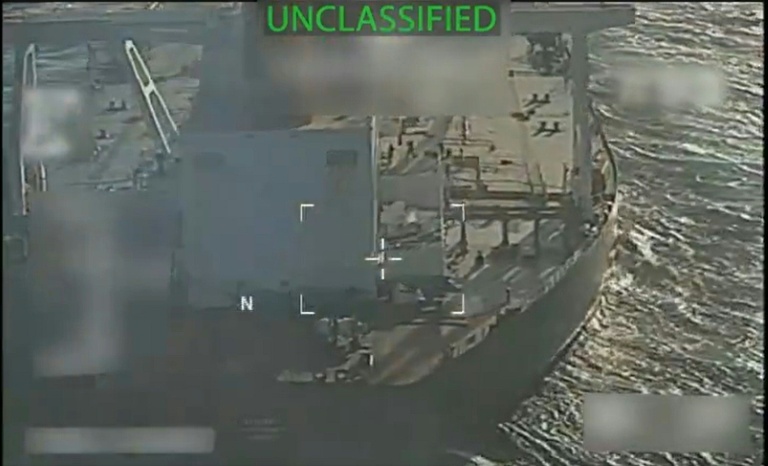
The geopolitical standoff between the United States and Venezuela has entered a perilous new phase. Following the reimposition of broad oil sanctions in April 2024, the Biden administration has signaled a more aggressive enforcement posture, including the potential targeting of Venezuelan oil tankers suspected of violating sanctions. This escalation poses an existential question: Can the Venezuelan state and its crumbling economy survive a concerted U.S. campaign against its maritime oil trade?
For Venezuela, oil is not merely an export; it is the state’s lifeblood. Despite a catastrophic decline from over 3 million barrels per day (bpd) a decade ago to roughly 800,000-900,000 bpd today, oil still accounts for over 95% of the nation’s export revenue. This revenue is what sustains the government of Nicolás Maduro, funds the military, and allows for the import of limited food and medicine. Severing this artery is the ultimate sanction.
The New “Shadow Fleet” & U.S. Countermeasures
In recent years, Venezuela, like Iran and Russia, has built a “shadow fleet” of aging tankers. These vessels operate with obscured ownership, frequently turn off transponders to conduct clandestine ship-to-ship transfers, and rely on complex insurance and flagging schemes. Their primary destinations are China and other Asian markets, offering crucial hard currency outside the U.S.-dominated financial system.
The U.S. Treasury’s Office of Foreign Assets Control (OFAC) now aims to dismantle this network. Potential measures go beyond fines and include:
- Physical Denial of Access: Refusing port services, bunkering, or canal transit to non-compliant vessels.
- Secondary Sanctions: Targeting foreign buyers, insurers, and shipowners who facilitate the trade.
- Maritime Interdiction: While a direct, forcible seizure on the high seas is a major escalation, it remains a theoretical tool.
The Chavista Survival Toolkit: Resilience and Risk
The Maduro government is not defenseless. Its survival toolkit, honed over years of maximum pressure, includes:
- Deepening the “Shadow Trade”: Further obscuring transactions using cryptocurrencies, barter deals (e.g., oil for Iranian drones or Chinese machinery), and even greater use of dark fleets.
- The China Lifeline: China remains the largest buyer of Venezuelan oil, often at steep discounts. While Chinese banks may comply with U.S. sanctions, the trade is likely to continue through murkier channels, sustaining a baseline revenue stream.
- Domestic Political Fortress: Maduro has solidified control over all state institutions, the military, and the economic apparatus. He frames the U.S. pressure as an “economic war,” using it to rally nationalist sentiment and blame external forces for the country’s profound humanitarian crisis.
- Regional Diversion: Efforts to court other Latin American partners and exploit regional anti-U.S. sentiment could provide minor diplomatic and economic relief.
Breaking Points: Where the Strategy Could Collapse
However, Venezuela’s system is already in a state of managed collapse. Intensified tanker targeting could trigger several catastrophic failure points:
- Financial Strangulation: If the mechanisms for receiving payment become too fraught, even discounted oil sales could freeze, causing a near-total loss of foreign currency.
- The Gasoline Paradox: Venezuela famously sits atop the world’s largest oil reserves yet suffers from chronic gasoline shortages. It relies on imports of refined products, often facilitated by the same shadow networks. Disrupting these could paralyze the already minimal domestic transportation and agriculture.
- Military and Elite Morale: The cohesion of the armed forces and ruling party elites is built on patronage. An extreme cash crunch could threaten the loyalties that keep Maduro in power.
- Humanitarian Catastrophe: Venezuela’s population is exhausted by hyperinflation, malnutrition, and a collapsed healthcare system. A further economic shock could precipitate a new, even more desperate migration wave, destabilizing the region.
The U.S. Calculus and the Diplomatic Wild Card
The U.S. strategy walks a fine line. The goal is ostensibly to pressure Maduro into holding free and fair elections, not to cause a total state failure that would unleash further regional chaos and a migration crisis on America’s doorstep. Overly aggressive tactics that collapse the oil trade entirely carry massive blowback risks.
This introduces the critical wild card: diplomacy. The temporary sanctions relief agreed in late 2023 showed a path exists. A return to negotiations, perhaps after the U.S. election in November 2024, could see a renewed quid pro quo: verified electoral guarantees for restored oil licenses.
Conclusion: Survival at a Devastating Cost
Venezuela can likely survive in a technical sense—the state apparatus will not disappear overnight. The Maduro government has proven ruthlessly resilient and adaptable in the face of immense pressure.
But the more pertinent question is: survive as what, and at what cost? A full-court press against its oil tankers would push the country from a profound crisis into a deeper, darker abyss. It would mean survival as a failed state, a Caribbean North Korea, utterly isolated and sustained by a trickle of oil exchanged for the bare minimum to keep the ruling elite in place. The true cost would be borne by millions of ordinary Venezuelans, trapped in a nation whose lifeblood is slowly being drained away on the high seas.
The ultimate outcome, therefore, may depend less on maritime enforcement tactics and more on whether Washington and Caracas can find a diplomatic off-ramp before the Venezuelan state—and its people—hit a point of no return.
About The Author
