
Introduction
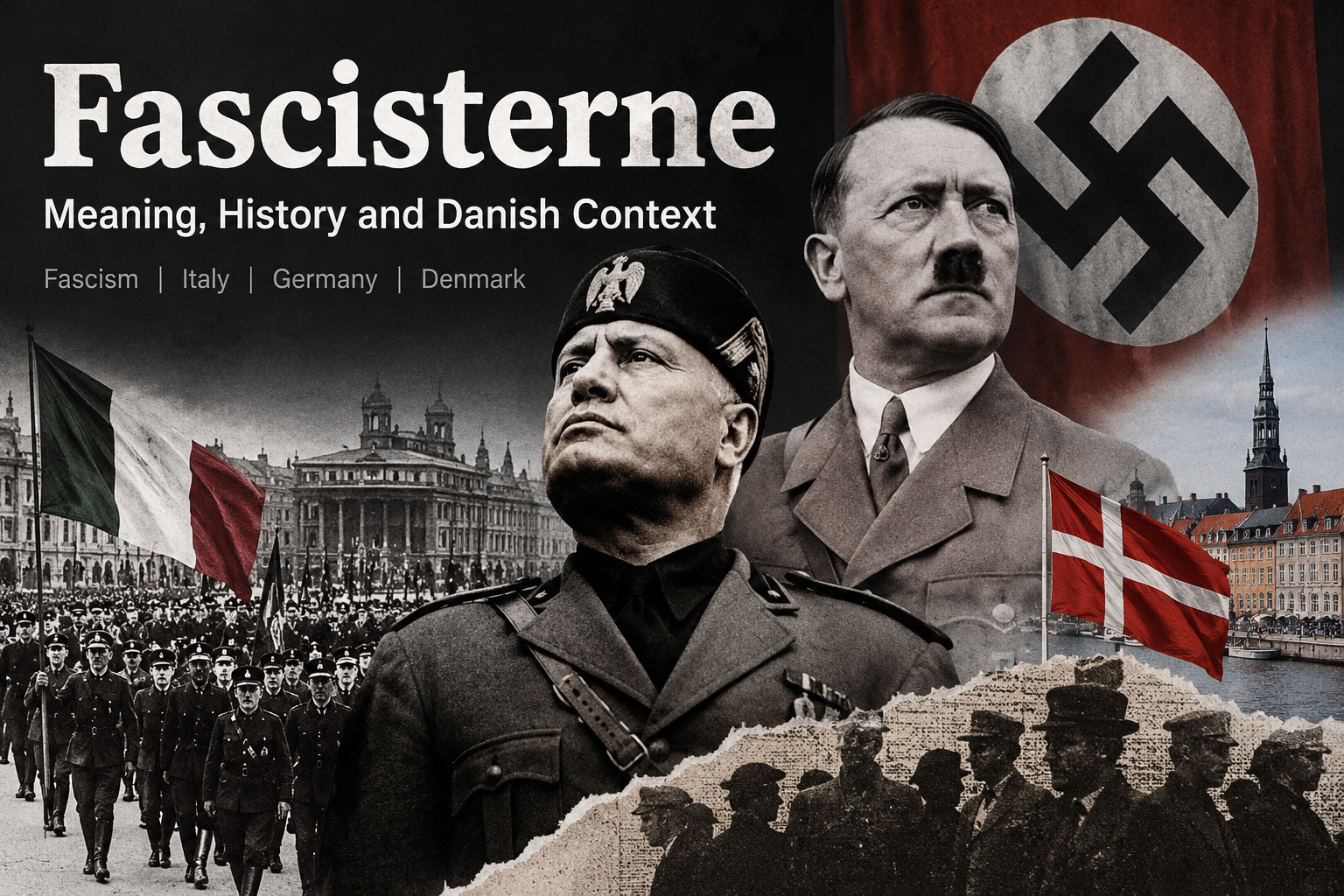
Fascisterne is a Danish word that means “the fascists” in English. The term refers to people associated with fascism, a political ideology that became influential in Europe during the early twentieth century. Although the word looks like the name of a particular political organization, it is actually a grammatical form of the Danish word fascist.
The term is closely connected with European history, especially the rise of fascist movements in Italy and Germany, the Second World War, and the political changes that affected many European countries. Understanding Fascisterne requires looking at both its linguistic meaning and the historical events associated with fascism.
This article explains the meaning of Fascisterne, its origins, the main characteristics of fascism, its connection with Denmark, and why the term remains relevant in historical and political discussions.
What Does Fascisterne Mean?
Fascisterne translates directly into English as “the fascists.” It describes a particular or previously identified group of people associated with fascism.
In Danish, the related words have slightly different meanings:
| Danish word | English meaning |
|---|---|
| Fascist | A fascist |
| Fascisten | The fascist |
| Fascister | Fascists |
| Fascisterne | The fascists |
| Fascisme | Fascism |
This distinction is important because Fascisterne refers to people, while fascisme refers to the political ideology itself.
The word does not automatically identify one specific political party. Depending on the surrounding text, it may describe Italian fascists, Danish fascist groups, or other people associated with fascist movements.
For this reason, readers should examine the context whenever they encounter the term in a Danish article, historical document, or political discussion.
Where Did the Word Fascisterne Originate?
The word belongs to a wider European vocabulary that developed alongside modern fascism.
The political term fascism is strongly connected with Italy after the First World War. Benito Mussolini established a fascist political movement that promoted authoritarian leadership, aggressive nationalism, and the concentration of political power.
The name has a deeper linguistic connection to the Italian word fascio, meaning a bundle or association, and the Latin word fasces, a bundle of rods associated with authority in ancient Rome.
Mussolini’s movement adopted Roman symbolism to communicate ideas of national strength, unity, and authority. Over time, the terms fascism and fascist became widely used to describe related political movements in Europe.
As the ideology spread, similar vocabulary appeared in several European languages, including Danish. Fascisterne became the Danish definite plural form used when referring to “the fascists.”
What Is Fascism?
Fascism is an authoritarian political ideology historically associated with extreme nationalism, strong centralized leadership, hostility toward liberal democracy, and the suppression of political opposition.
Although fascist movements differed between countries, many shared several important characteristics.
1. Authoritarian Leadership
Fascist movements often promote a powerful leader who claims to represent the nation’s interests. They may weaken democratic checks and balances and concentrate authority in the hands of the government or ruling party.
2. Extreme Nationalism
Fascism frequently places the nation above individual interests and promotes an aggressive idea of national identity. Some historical movements used racial theories and claims of national superiority to justify discrimination and exclusion.
3. Suppression of Political Opposition
Historical fascist regimes restricted opposition parties, independent organizations, and political criticism. In some cases, opponents faced imprisonment, intimidation, and violence.
4. Propaganda and Mass Mobilization
Fascist movements used speeches, newspapers, public demonstrations, symbols, and organized campaigns to influence public opinion. Propaganda often presented the leader as a national savior while portraying opponents as threats.
5. Militarism and Political Violence
Many fascist movements celebrated military strength and treated violence as a political tool. Armed groups and state security forces were sometimes used to intimidate opponents and maintain control.
These characteristics help explain why fascism is studied as a major political development in modern European history.
Fascisterne and the History of Italy
Italy played a central role in the development of modern fascism.
Following the First World War, Italy experienced economic difficulties, political unrest, social conflict, and dissatisfaction with the existing political system. These conditions helped fascist organizations gain support among some sections of society.
Benito Mussolini became the leading figure of the Italian fascist movement. In 1922, the March on Rome increased pressure on the Italian monarchy and political establishment, leading King Victor Emmanuel III to appoint Mussolini as prime minister.
Mussolini subsequently transformed Italy into a dictatorship. His government restricted political opposition, controlled important institutions, promoted propaganda, and pursued aggressive foreign policies.
The Italian experience influenced political movements elsewhere in Europe. However, different movements adopted fascist ideas in different ways, and their histories should not be treated as identical.
Fascisterne and Denmark During the Second World War
The word Fascisterne can also appear in discussions of Denmark’s political history.
Denmark had its own far right and Nazi political movement before the Second World War. One of the best known organizations was the Danish National Socialist Workers’ Party, commonly abbreviated as DNSAP.
Founded in 1930, DNSAP drew heavily on German National Socialism. Its ideology included authoritarian nationalism, antisemitism, and opposition to parliamentary democracy.
When Germany occupied Denmark in April 1940, Danish political life changed significantly. The occupation created difficult choices for the government, political organizations, resistance groups, and ordinary citizens.
DNSAP supported the German aligned political order but failed to gain sufficient electoral support to take control of the Danish government. Danish society also included people who resisted the occupation and opposed Nazi policies.
The historical context matters because the term Fascisterne may refer to different groups in Danish sources. It should not be assumed that every mention identifies DNSAP specifically.
What Was the Difference Between Fascism and Nazism?
Fascism and Nazism were related authoritarian movements, but they were not identical.
Italian Fascism developed under Mussolini and emphasized authoritarian nationalism, state power, political unity, and military strength. German Nazism, led by Adolf Hitler, shared several of these features but placed an especially central role on racial ideology, antisemitism, and the pursuit of a racially defined national community.
Both movements dismantled democratic institutions, used propaganda, persecuted political opponents, and employed state violence. Nazi Germany also carried out the Holocaust, the systematic murder of six million Jews, alongside the persecution and murder of millions of other victims.
Understanding these similarities and differences is essential when interpreting historical references to Fascisterne. The exact meaning depends on the group and period being discussed.
Why Is Fascisterne Still Relevant Today?
Fascisterne remains relevant because historians, students, journalists, and readers encounter the term when studying European politics and twentieth century history.
The word also appears in contemporary political discussions. In these settings, the label “fascist” is sometimes used to criticize political opponents, although such usage may not reflect the historical definition.
A careful discussion should distinguish between documented fascist ideology and general disagreement with a political position.
Several historical warning signs are commonly examined when studying authoritarian movements:
- Attempts to weaken democratic institutions.
- Political intimidation and violence.
- Efforts to restrict independent journalism.
- The dehumanization of minority groups.
- The use of propaganda to undermine trust in opponents.
- The concentration of power without meaningful accountability.
These features should be evaluated through evidence and historical context rather than used as automatic labels for every political dispute.
Studying fascism helps readers understand how democratic systems can become vulnerable and why independent institutions, civil liberties, and political accountability matter.
How to Understand Fascisterne in Danish Texts
If you encounter Fascisterne while reading Danish material, consider the subject of the surrounding paragraph.
A text about Italy in the 1920s may use the word for followers of Mussolini. A Danish history book discussing the German occupation may use it when referring to Danish fascists or other related political groups. A modern opinion article may use the word in a broader political sense.
The surrounding information determines the intended reference.
It is also helpful to distinguish between a dictionary definition and a writer’s interpretation. The literal meaning of Fascisterne is “the fascists,” but the author may be discussing a specific organization, a historical period, or a broader political category.
Recognizing this distinction makes translations more accurate and prevents misunderstandings.
Conclusion
Fascisterne is a Danish word meaning “the fascists.” It refers to people associated with fascism rather than to the political ideology itself. Its meaning is closely connected with the rise of fascist movements in Europe, the dictatorship of Benito Mussolini, Nazi Germany, and Denmark’s own political history during the twentieth century.
The term is best understood through its language, historical background, and surrounding context. It does not identify one particular organization on its own, and its meaning can change according to the group being discussed.
By learning the difference between Fascisterne and fascism, readers can better understand Danish historical sources and the political events that shaped modern Europe.
Frequently Asked Questions
1. What does Fascisterne mean in English?
Fascisterne is a Danish word that translates to “the fascists.” It refers to a group of people associated with fascism.
2. Is Fascisterne a political organization?
No. The word itself is a grammatical form of a Danish noun, not the name of one specific political organization. Its reference depends on the surrounding context.
3. What is the difference between Fascisterne and fascism?
Fascisterne means “the fascists,” referring to people. Fascism is the political ideology associated with authoritarian nationalism and the suppression of political opposition.
4. Where did fascism begin?
Modern fascism first developed as a major political movement in Italy after the First World War, particularly under Benito Mussolini.
5. Was there a fascist movement in Denmark?
Yes. Denmark had far right and Nazi political organizations, including DNSAP, which was founded in 1930 and drew inspiration from German National Socialism.
6. Are fascism and Nazism the same?
They are related but distinct ideologies. Both promoted authoritarian rule and suppressed political opposition, while Nazism placed an especially central role on racial ideology and antisemitism.
7. Why do people search for Fascisterne online?
People may encounter the term in Danish language materials, European history articles, Second World War discussions, or political commentary. They may search for it to understand its translation and historical meaning.
8. Why is it important to understand Fascisterne correctly?
Understanding the term helps readers interpret Danish texts accurately, distinguish people from political ideologies, and learn about the historical movements associated with fascism.
About The Author
