
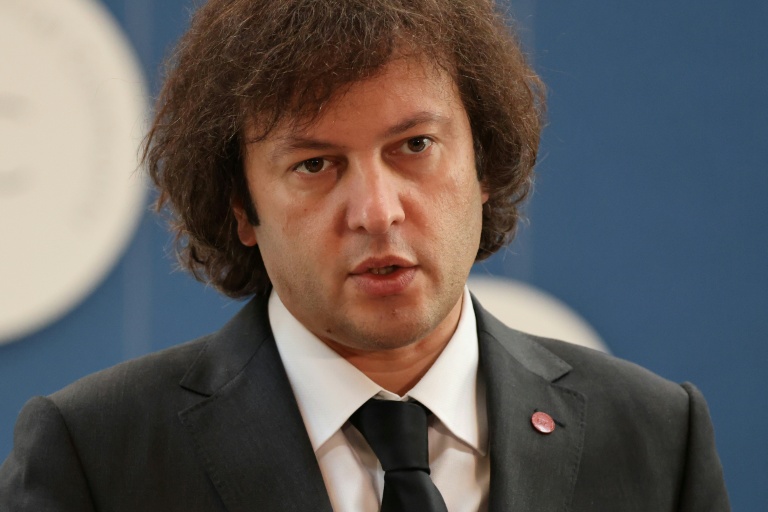
In the hushed, marbled halls of Tbilisi’s government district, a diplomatic chill has settled—one that speaks not of a broken relationship, but of a profound recalculation. The recent, pointed snub of Georgia’s ruling party by a visiting U.S. senator, J.D. Vance, has become a stark symbol of a fraying transatlantic bond. Yet, the official response from Tbilisi has been neither fiery defiance nor panicked appeasement. Instead, Georgia’s leadership projects an image of waiting—patiently, strategically, and with a hint of defiance—for a reset they believe U.S. politics will eventually force.
The Snub That Spoke Volumes
The incident itself was a masterclass in diplomatic dismissal. Senator Vance, a Republican and a close ally of Donald Trump, visited Georgia in June, a nation of critical geopolitical importance in the Black Sea region. He met with the imprisoned former President Mikheil Saakashvili and members of the opposition, but conspicuously avoided any meeting with representatives of the ruling Georgian Dream party or the government.
This was not an oversight. It was a deliberate signal, echoing the Biden administration’s own growing frustration. The message was clear: a significant and bipartisan faction in Washington no longer sees the current Georgian government as a partner in democracy, but as an obstacle. The reasons are well-documented: the push for a “foreign agents” law (vetoed after mass protests but haunting the political space), perceived backsliding on judicial independence, and a warming of ties with Moscow despite the war in Ukraine.
Georgia’s Calculated Response: Patience as a Strategy
In the face of this Western pressure, Georgian Dream has adopted a posture of “strategic patience.” Their narrative, broadcast tirelessly on pro-government channels, frames the situation thusly:
- The U.S. is “Temporarily Misguided”: Officials in Tbilisi argue that the current U.S. administration, and senators like Vance who oppose its foreign policy, are both operating on flawed information, influenced by a politicized NGO sector and a bitter Georgian opposition. They portray themselves as the stable, popular bulwark against a return to the “chaotic” Saakashvili era.
- Awaiting the Electoral Reset: The core of the patience lies in the calendar. With pivotal U.S. elections in November, many in Georgian Dream are betting on a shift. A potential second Trump administration, they reason, would bring a more transactional, less values-driven foreign policy. In this calculus, Georgia’s geographic utility as a logistical hub and historical opponent of Russia could outweigh concerns over its democratic health. Vance’s visit, despite the snub, is seen as an early reconnaissance mission for this potential new reality.
- Sovereignty as a Shield: The government wraps its stance in the language of national sovereignty and “traditional values,” positioning itself as a small nation courageously resisting external diktats. This plays powerfully to a segment of the population weary of being told what to do by foreign powers and fuels a “West vs. Us” narrative that consolidates their base.
The Risks of Waiting
This patient strategy, however, is fraught with immense risk.
- Damaging the Foundation: The U.S.-Georgia partnership was never based solely on geopolitics; it was built on a shared democratic project. Allowing that foundation to crumble for perceived short-term political gain could permanently diminish Georgia’s standing in Washington, regardless of who is in power.
- Playing with Fire: Banking on a U.S. election outcome is a dangerous gamble. Should the political winds in Washington not shift as desired, Georgia could find itself isolated, having burned bridges with key Democratic figures while gaining no firm commitment from Republicans.
- The EU Factor: The “patient” wait for the U.S. reset is paralyzing Georgia’s more urgent goal: European Union membership. Brussels’ concerns align closely with Washington’s. Alienating one Atlantic partner inevitably damages relations with the other, putting the coveted EU candidate status in severe jeopardy.
A Fork in the Road
Georgia is at a strategic crossroads. The “patient waiting” is, in reality, an active choice to deepen a divide in the hope that the world on the other side will change to suit its needs. It is a gamble that places domestic political consolidation above entrenched strategic partnerships.
The coming months will reveal whether this patience is a stroke of genius or a historic miscalculation. The United States may indeed reset its foreign policy after November, but there is no guarantee that reset will favor a Georgia perceived to have drifted into illiberalism and Kremlin appeasement. The snub from Senator Vance was not just an insult; it was a warning. Tbilisi’s patient wait will determine whether that warning was heeded, or arrogantly dismissed.
About The Author
